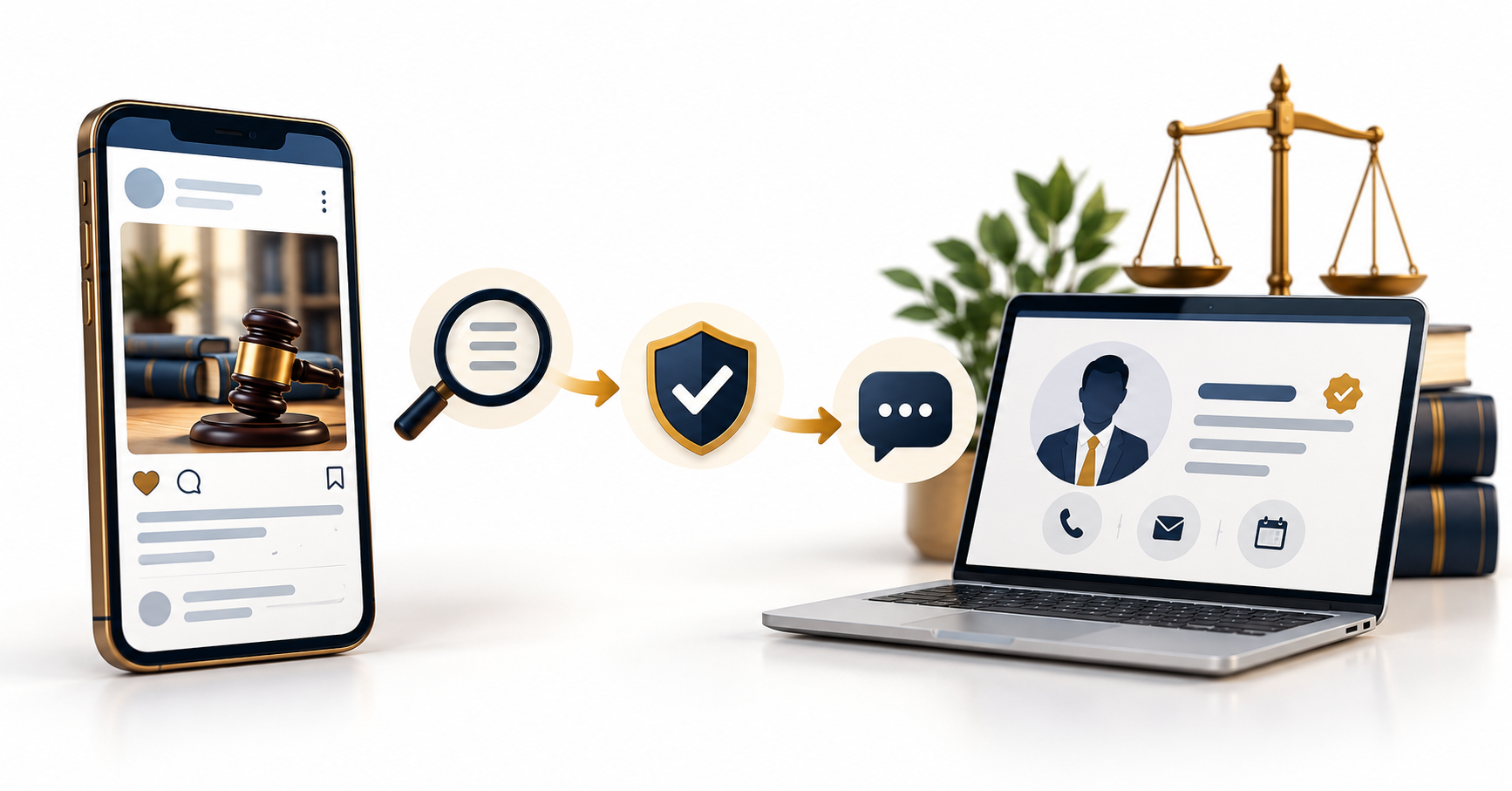
A short video may answer a question you have been afraid to ask. A social media post might explain a legal term you have seen in a court document. That can be a useful starting point when you need help, but choosing an attorney takes more than finding a post that sounds relevant.
The strongest online search moves in stages: learn the basics, check who is providing the information, and then contact a professional about your own circumstances.
Use posts to identify your questions
Social media can help you put a name to what you are experiencing. You might encounter a post about parenting time, a video explaining what happens at an initial consultation, or a graphic listing documents to gather.
Save material that helps you form questions for an attorney. You can explore visual guides to family law topics in the same way: as a way to find subjects you want to understand more fully. A post may introduce an issue, but its brief format cannot account for your location, deadlines, or the details of your case.
Check the person behind the advice
Before relying on an attorney’s profile, confirm their name, firm, location, and practice area. Then check whether they are licensed in the state relevant to your matter. The American Bar Association’s lawyer licensing directory points to agencies that can help you verify a lawyer’s license and standing.
A polished profile or large following does not answer whether a lawyer handles your type of matter or practices where you need assistance. The ABA also offers bar directories and lawyer finders that can help you continue your search.
Look beyond a compelling result or testimonial
A success story may catch your attention, but every legal matter has its own facts. Read a firm’s website for information about the services it provides, the attorneys who may handle your matter, and how to arrange a consultation. If fees or the consultation process are unclear, ask.
Lawyers’ communications about their services are subject to rules against false or misleading statements. The ABA’s Model Rule 7.1 provides a general framework, while applicable state rules may differ.
Move private details to a verified contact channel
It may be tempting to explain your situation in a comment or respond to an account that offers help through a direct message. Before sharing documents or payment information, independently find the firm’s official website and use the contact details listed there.
That extra step matters because accounts can be impersonated. The Federal Trade Commission has warned about scams in which people pose as attorneys or law firms on social media.
An initial conversation is your chance to ask whether the attorney handles your issue, practices in the relevant jurisdiction, and can explain the likely next steps. Social media may help you begin the search. Verification and a direct conversation help you decide where to turn for legal help.